
Table of Contents
ToggleLearning how to Internet of Things can feel like stepping into a tech wonderland. Smart thermostats adjust temperatures before you get home. Security cameras send alerts to your phone. Coffee makers start brewing when your alarm goes off. This is the Internet of Things in action, and it’s more accessible than most people realize.
The Internet of Things connects everyday devices to the internet, allowing them to communicate and share data. In 2024, over 15 billion IoT devices were active worldwide. That number continues to grow as more households and businesses adopt connected technology.
This guide breaks down how to Internet of Things from scratch. It covers the basics, essential components, first project steps, practical applications, and security best practices. By the end, anyone can start building their own IoT ecosystem.
Key Takeaways
- The Internet of Things connects everyday devices to the internet, enabling them to communicate, share data, and automate tasks.
- Essential IoT components include microcontrollers (like Arduino or ESP32), sensors, connectivity modules, and cloud platforms.
- Start learning how to Internet of Things by building a simple project like a temperature monitor—total cost is typically under $20.
- Practical beginner IoT applications include smart home automation, plant monitoring systems, weather stations, and pet feeders.
- Secure your IoT devices by changing default passwords, keeping firmware updated, and connecting devices to a separate network.
- Hands-on experimentation is the most effective way to understand how to Internet of Things and build your own connected ecosystem.
What Is the Internet of Things
The Internet of Things refers to physical devices that connect to the internet and exchange data. These devices include sensors, appliances, wearables, and industrial equipment. They collect information, send it to other devices or cloud platforms, and often act on that data automatically.
A smart thermostat illustrates this concept well. It reads the room temperature, sends data to a server, learns your preferences, and adjusts heating or cooling without manual input. The thermostat “talks” to your smartphone, letting you control it remotely.
IoT devices share three key traits:
- Connectivity: They link to the internet or local networks
- Data collection: Sensors gather information from their environment
- Automation: They perform actions based on collected data or user commands
The Internet of Things spans consumer products like fitness trackers and smart speakers. It also powers industrial systems, healthcare monitors, and agricultural sensors. Understanding how to Internet of Things starts with grasping this foundation.
Essential Components for an IoT Setup
Building an IoT system requires several core components. Each plays a specific role in making devices communicate and function together.
Microcontrollers and Development Boards
Microcontrollers serve as the “brain” of IoT projects. Popular options include:
- Arduino: Great for beginners, with extensive community support
- Raspberry Pi: A full mini-computer capable of running operating systems
- ESP32/ESP8266: Budget-friendly boards with built-in Wi-Fi and Bluetooth
These boards process data from sensors and execute programmed instructions.
Sensors and Actuators
Sensors detect changes in the environment. Temperature sensors, motion detectors, humidity monitors, and light sensors are common choices. Actuators do the opposite, they create physical actions. Motors, relays, and LED lights fall into this category.
Connectivity Modules
IoT devices need ways to communicate. Wi-Fi modules handle most home IoT projects. Bluetooth works well for short-range connections. For longer distances or lower power needs, LoRa and Zigbee offer alternatives.
Cloud Platforms and Software
Cloud services store and process IoT data. AWS IoT, Google Cloud IoT, and Microsoft Azure provide infrastructure for device management. For simpler projects, platforms like Blynk or ThingSpeak offer user-friendly interfaces.
Gathering these components is the first practical step in learning how to Internet of Things works in real applications.
Steps to Build Your First IoT Project
Starting an IoT project doesn’t require advanced engineering skills. Following these steps creates a solid foundation.
Step 1: Choose a Simple Project
Begin with something manageable. A temperature monitoring system makes an excellent first project. It teaches sensor integration, data transmission, and basic programming without overwhelming complexity.
Step 2: Gather Your Hardware
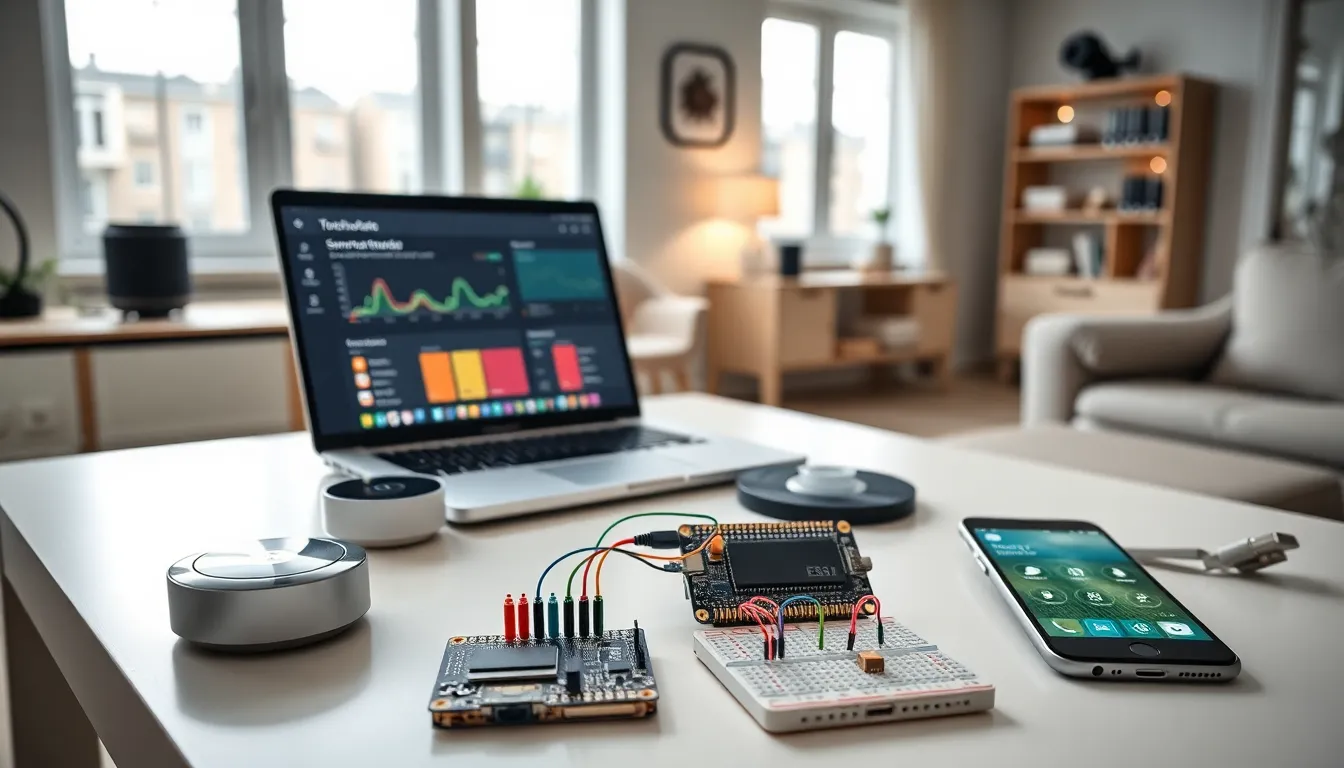
For a basic temperature monitor, you’ll need:
- An ESP32 or Arduino board
- A DHT11 or DHT22 temperature sensor
- Jumper wires
- A breadboard
- USB cable for power and programming
Total cost typically stays under $20.
Step 3: Set Up Your Development Environment
Download the Arduino IDE or PlatformIO. Install the necessary board libraries and drivers. These tools let you write code and upload it to your microcontroller.
Step 4: Write and Upload Code
Most beginner projects have sample code available online. Modify this code to match your specific hardware setup. Upload it to your board and test the basic functionality.
Step 5: Connect to the Cloud
Create an account on a platform like ThingSpeak. Configure your device to send data to this platform. You’ll see real-time temperature readings displayed on a dashboard.
Step 6: Expand and Experiment
Once the basic system works, add features. Include humidity readings. Set up alerts for specific temperature thresholds. This iterative approach builds skills progressively.
Learning how to Internet of Things happens best through hands-on experimentation.
Common IoT Applications for Beginners
Several practical IoT projects suit newcomers. Each offers learning opportunities while creating something useful.
Smart Home Automation
Controlling lights, fans, or appliances remotely ranks among the most popular starter projects. A relay module connected to a Wi-Fi-enabled board can switch devices on and off via smartphone apps.
Plant Monitoring Systems
Soil moisture sensors track when plants need water. More advanced setups automate watering through connected pumps. Gardeners and indoor plant enthusiasts find these systems valuable.
Home Security Additions
Motion sensors trigger alerts or activate cameras. Door and window sensors notify homeowners of unexpected openings. These projects demonstrate how the Internet of Things enhances safety.
Weather Stations
Combining temperature, humidity, barometric pressure, and rain sensors creates personal weather stations. Data logs help track local climate patterns over time.
Pet Feeders
Automated feeders dispense food on schedules or via remote commands. Adding weight sensors ensures pets receive proper portions.
These applications show how to Internet of Things concepts translate into everyday benefits. Starting with one project often sparks ideas for others.
Tips for Securing Your IoT Devices
IoT devices present security risks if left unprotected. Following basic security practices prevents most common threats.
Change Default Credentials
Manufacturers ship devices with standard usernames and passwords. Attackers know these defaults. Change credentials immediately upon setup.
Keep Firmware Updated
Updates patch security vulnerabilities. Enable automatic updates when available. Check manually for updates at least monthly.
Use Strong Network Security
Connect IoT devices to a separate network or VLAN. This isolation limits damage if one device gets compromised. Use WPA3 encryption on your router.
Disable Unnecessary Features
Many devices include features users never need. Remote access, voice control, or certain protocols may not serve your use case. Disable what you don’t use.
Monitor Device Behavior
Unusual network traffic or unexpected device activity signals potential problems. Router logs and network monitoring tools help spot anomalies.
Research Before Buying
Some manufacturers prioritize security more than others. Read reviews focusing on security track records. Avoid devices from companies with histories of unpatched vulnerabilities.
Securing IoT devices protects personal data and prevents devices from joining botnets. Good security habits should accompany any exploration of how to Internet of Things technology works.


